
Energy-Efficient Glass Inserts for Doors in North Texas Homes
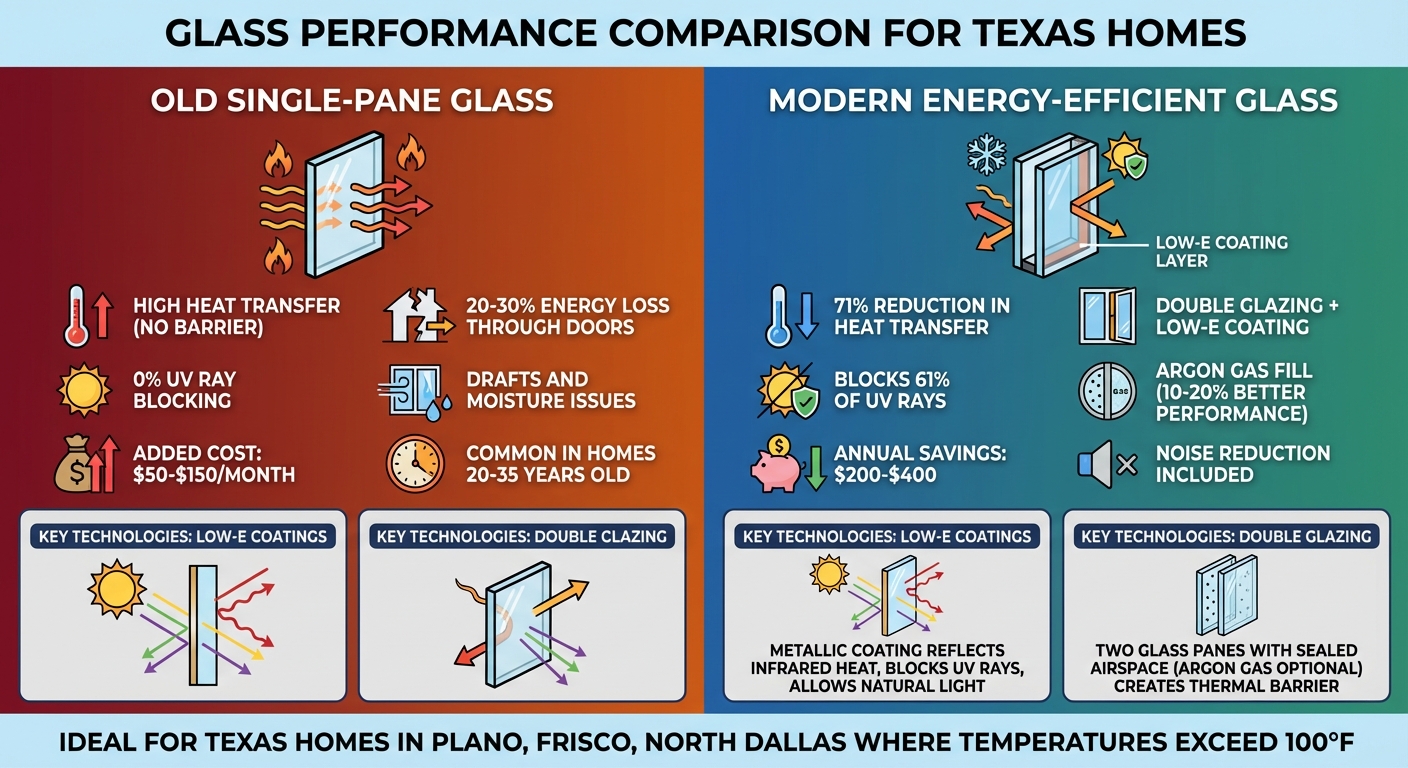
In Texas, where summer temperatures often exceed 100°F, outdated single-pane or builder-grade glass inserts in doors can significantly increase energy bills and reduce indoor comfort. Homes built 20–35 years ago in areas like Plano, Frisco, and North Dallas often still rely on these inefficient materials, leading to heat transfer, drafts, and higher cooling costs – sometimes adding $50–$150 per month. Upgrading to modern energy-efficient glass inserts with Low-E coatings and double glazing offers a practical solution, cutting heat transfer by 71%, blocking 61% of UV rays, and saving $200–$400 annually on energy bills.
These upgrades also improve noise reduction, eliminate moisture issues, and enhance the overall look of your home. Proper installation by FGIA-certified professionals is key to ensuring airtight seals and long-term performance. For homes in Texas, where extreme heat and UV exposure are common, investing in high-performance glass inserts is a smart way to reduce energy costs, improve comfort, and give your home a polished appearance.
If you’re dealing with foggy panes, drafts, or high energy bills, consider a certified evaluation to explore how energy-efficient glass inserts can transform your home.
Energy Efficient Windows and Doors Made Simple
How Energy-Efficient Glass Technologies Work
When it comes to battling Texas heat and keeping your home comfortable, door glass inserts rely on two major technologies: Low-E coatings and double glazing. These advanced solutions work hand-in-hand to significantly reduce heat transfer through your doors. By understanding how they operate, you’ll see why upgrading from builder-grade glass can make a noticeable difference in both comfort and energy savings. Let’s break down how each technology contributes to better efficiency.
What Are Low-E Coatings?
Low-E (low-emissivity) glass features a nearly invisible metallic coating, often made from metal oxide, that’s applied directly to the glass surface. This ultra-thin layer transforms how the glass interacts with heat. Instead of absorbing and allowing heat to pass through, the coating reflects infrared heat energy back toward its source. In practical terms, this means it bounces summer heat away from your home while keeping winter warmth inside.
Another major benefit? Low-E coatings block up to 61% of UV rays – the same rays that can fade your carpets, furniture, and flooring over time. Despite this protection, the glass still allows plenty of natural light to illuminate your space. For Texas homeowners, especially in areas like Plano and Frisco, selecting the right Low-E coating is crucial. Soft-coat Low-E glass is particularly effective in hot climates like ours because it has a lower solar heat gain coefficient (SHGC) compared to hard-coat versions. A lower SHGC means less solar heat enters your home, lightening the load on your air conditioner during those scorching 100°F+ afternoons. At Optimal Windows, we use Cardinal Low-E Glass, specifically designed to handle Texas’s intense heat and UV exposure.
How Double Glazing Improves Insulation
Double glazing takes insulation to the next level by using two panes of glass separated by a sealed airspace. This airspace acts as a thermal barrier, slowing down the transfer of heat. In contrast, single-pane glass offers almost no resistance to heat flow, which is why builder-grade doors often feel unbearably hot in summer or icy cold in winter. By adding that second pane and creating an insulating gap, double glazing effectively prevents outdoor temperatures from reaching the interior glass surface.
For even better performance, the airspace can be filled with argon gas. Argon, being denser and less conductive than air, reduces heat transfer by an additional 10–20%. This upgrade is especially beneficial for doors that face south or west, where they endure the brunt of the sun’s intensity. In homes across Plano, Frisco, and McKinney, argon-filled double glazing can make a noticeable difference, keeping the interior glass surface closer to room temperature while minimizing drafts and condensation.
When paired with Low-E coatings, double-glazed door inserts deliver impressive results. They can reduce winter heat loss by up to 71% compared to single-pane glass, while also cutting down on summer heat gain. The result? Less strain on your HVAC system, lower energy bills, and a more comfortable home year-round.
Benefits of Energy-Efficient Door Glass Inserts in Texas Homes
Energy-efficient glass inserts, featuring advancements like Low-E coatings and double glazing, can breathe new life into aging doors, offering noticeable comfort upgrades, reduced energy costs, and increased home value – especially in Texas. For homeowners in Plano, Frisco, and North Dallas, where builder-grade doors often struggle to handle the region’s extreme heat and UV exposure, these upgrades provide far-reaching advantages that go well beyond just saving on utility bills.
Lower Energy Bills and Greater Comfort
Low-E glass plays a key role in reducing energy consumption, cutting heat loss by up to 71% during colder months and blocking up to 61% of UV rays. In a state like Texas, where air conditioning often runs most of the year, this can significantly ease the strain on your HVAC system. Many homeowners in Plano and North Dallas report feeling noticeable comfort improvements almost immediately after installation.
“We are very pleased with our Burris Windows from Optimal Windows! They have significantly reduced our cooling bills while enhancing our home’s look.” – Micah Roberts, Happy Homeowner
These glass inserts also help regulate indoor temperatures by eliminating hot spots near patio doors and reducing cold drafts around entryways during winter. This not only improves comfort but also extends the life of your HVAC system. The added bonus? Reduced energy usage translates to lower monthly bills.
Quieter, Draft-Free Living
Double-glazed inserts aren’t just about energy efficiency – they also create a quieter home. The insulating airspace between the panes works to dampen outdoor noise, offering a more peaceful indoor environment. If you’ve been dealing with the constant hum of traffic or neighborhood noise, this upgrade can make a noticeable difference. Plus, replacing builder-grade single-pane glass eliminates drafts and helps prevent the 20–30% energy loss often associated with older doors.
Boosted Curb Appeal and Natural Light
In addition to functional benefits, energy-efficient inserts can dramatically enhance your home’s appearance. Modern Low-E and double-glazed designs feature sleek, contemporary styling that instantly updates the look of your front and patio doors, giving your property a fresh, polished curb appeal. At the same time, these inserts allow more natural light to brighten your interiors, creating a welcoming and airy atmosphere.
“The windows are lovely and make a significant difference in the temperature inside our house.” – Teresa Rollins Khouw, Happy Homeowner
Choosing the Right Glass Inserts for Texas Climates
After considering the energy-saving advantages of Low-E coatings and double glazing, the next step is selecting the ideal glass insert to maximize your door’s performance in Texas’s challenging climate.
In regions like Plano, Frisco, and McKinney, where extreme heat, intense UV rays, and fluctuating temperatures are the norm, your door glass should focus on rejecting solar heat rather than merely letting in more light. Factors such as your door’s orientation, available shade, and personal comfort preferences all play a role in determining which glass technology will provide the best results for your home.
Cardinal Glass Options Tailored for DFW Homes
Cardinal offers three Low-E glass options specifically suited for Texas homes:
- LoĒ-366: This glass balances UV protection and light transmission, making it a versatile choice for most orientations.
- LoĒ-340: Designed for homes with west-facing or unshaded south-facing doors, this option provides superior solar control.
- Quad LoĒ-452+: Best for large or multi-panel doors, this glass offers top-tier performance for maximum energy efficiency.
For example, a Frisco home with a west-facing door could benefit from either LoĒ-340 or Quad LoĒ-452+ in an insulated fiberglass frame, significantly reducing solar heat gain while safeguarding interior furnishings. On the other hand, an Allen home with a north-facing door under a shaded porch might opt for LoĒ-366, which maintains natural brightness while still offering effective UV protection and insulation. The key is to match the glass to your door’s exposure and specific comfort needs rather than settling for a one-size-fits-all solution.
Pairing Glass Inserts with the Right Door Frames
Even the most advanced glass won’t perform as expected if paired with a frame that allows heat transfer or air leaks. Vinyl frames are naturally insulating and reduce thermal bridging around the glass, which is critical during Texas summers. Fiberglass frames offer similar thermal advantages, along with excellent structural stability and resistance to warping, ensuring a long-lasting, tight seal. Aluminum-clad frames, while durable, require thermal breaks and proper insulation to prevent edge-of-glass temperature spikes that can undermine efficiency.
When retrofitting, it’s essential to ensure the insert fits the door’s cut-out size, panel thickness, and glazing stops to create a snug, airtight seal. Installers should use sealants and gaskets compatible with the frame material to prevent issues like sealant breakdown, water leaks, or warping caused by Texas’s intense heat. Choosing FGIA-certified professionals, such as the team at Optimal Windows, ensures that your upgraded glass and existing frame work seamlessly together as an efficient, long-lasting system. Properly matching the glass and frame is crucial for achieving lasting energy savings and comfort.
Why Certified Installation Matters for Long-Term Performance
Even the most advanced Low-E coatings and double-glazed inserts can’t deliver their full potential if the installation process compromises the seal or alignment. In fact, industry data reveals that 70–80% of performance issues with windows and doors arise from installation errors, not product defects. This is especially critical in Texas, where summer temperatures often soar past 100°F. Poor installation in such conditions can lead to faster seal failures, condensation buildup, and air leaks that significantly reduce energy efficiency.
That’s where FGIA (Fenestration and Glazing Industry Alliance) certification comes into play. This certification ensures that installers follow proven methods for measuring, sealing, and securing glass inserts to meet industry standards. It’s not just about following a checklist – certified installations can retain up to 30% more energy efficiency compared to non-certified work. For homeowners in the DFW area, this translates to savings of $200–500 annually on heating and cooling costs. In homes built 20–35 years ago, particularly in areas like Plano, Frisco, and McKinney, where frames may have shifted or warped over time, certified installation ensures that new glass inserts fit perfectly and perform as intended for decades.
Key Installation Steps for Glass Inserts
To maximize the benefits of energy-efficient features like Low-E coatings and double glazing, proper installation is non-negotiable. Certified installers rely on precision tools and techniques to ensure a flawless fit. For instance, laser measurement tools are used to achieve tolerances within 1/16 inch, guaranteeing the glass insert aligns perfectly with the door’s cut-out. When removing the old glass, care is taken not to damage the surrounding frame, and all surfaces are meticulously prepared for adhesion.
High-performance structural adhesives, such as Novaguard, are then applied. These adhesives evenly distribute stress, resist thermal expansion, and maintain their integrity for over 20 years – far outlasting basic low grade sealants, which often fails within 5–10 years.
How Certified Installations Prevent Common Issues
Certified installation techniques address many of the problems that plague homes in North Dallas, such as drafts, foggy panes, and premature seal failures. By leveling frames, sealing joints, and incorporating drainage slopes, FGIA-certified installers can prevent up to 30% of energy loss caused by air leaks. This keeps your home comfortable during Texas’s unpredictable weather while reducing the strain on your HVAC system.
Additionally, certified installations include vapor barriers and thorough post-installation inspections, which reduce seal failures by 70–80% compared to non-certified work. For instance, Optimal Windows recently completed a project where air infiltration was reduced from 1.2 ACH50 to 0.28 ACH50. By using precise laser measurements, custom shimming, and OSI Quad sealant, they eliminated drafts and condensation, saving the homeowner $420 annually on energy bills.
“The final results look amazing and have already reduced our electric bill.” – Amanda Roy, Happy Homeowner
For older homes in the DFW area, where frames may have shifted over the years, certified installers use custom templating and adjustable glazing pockets to achieve a seamless fit. This ensures that your upgraded glass performs at its rated NFRC levels for years to come, without the need for a full frame replacement.
Conclusion
Switching to energy-efficient glass inserts offers a range of meaningful improvements for homes in Plano, Frisco, North Dallas, Allen, and McKinney. By combining advanced technologies like Low-E coatings and double glazing with expert, certified installation, you can protect your home from the relentless Texas heat and damaging UV rays. This upgrade not only eases the burden on your HVAC system but also creates a more comfortable and enjoyable living environment. Many homeowners notice lower cooling costs, quieter interiors, better natural light without the added heat, and even a boost in curb appeal – all from upgrading a single door.
With FGIA-certified installers, you can trust that every detail is handled with precision – no gaps, leaks, or weak seals to compromise performance. For homes built 20–35 years ago, where frames may have shifted or warped due to time and Texas’s demanding climate, this upgrade transforms a simple door replacement into a durable, tailored solution for our region’s intense summers, strong sun, and occasional chilly winter days.
FAQs
How do Low-E coatings and double glazing make doors more energy-efficient?
Low-E coatings are designed to reflect infrared heat, effectively keeping your home cozier during the winter and cooler in the summer. When paired with double glazing – which adds a layer of insulating air or gas between two panes of glass – this combination significantly reduces heat transfer.
This teamwork between Low-E coatings and double glazing enhances energy efficiency, helping to maintain a steady, comfortable indoor temperature throughout the year. As a result, you’ll rely less on heating and cooling systems, which can lead to noticeable savings on your energy bills.
Why should energy-efficient glass inserts be installed by FGIA-certified professionals?
When you choose FGIA-certified professionals to install energy-efficient glass inserts, you’re ensuring that your home reaps the full benefits of these advanced materials. Expert installation plays a key role in optimizing their performance, helping to reduce heat transfer, cut down on energy bills, and eliminate drafts or leaks that could undermine their effectiveness.
Beyond immediate energy savings, certified installations contribute to the long-term durability of your windows and doors. This means fewer headaches and avoiding expensive repairs in the future. By trusting trained experts, you’re making sure your investment in energy efficiency delivers the comfort and reliability you deserve.
What type of energy-efficient glass insert is best for homes in Texas?
When it comes to Texas homes, selecting glass inserts with Low-E coatings and double glazing is a smart move. These features work together to limit heat transfer, improve insulation, and help lower energy costs. In a state known for its relentless heat and high UV exposure, these glass options make a noticeable difference in maintaining indoor comfort.
For lasting performance in Texas’s challenging climate, opt for glass inserts that meet FGIA-certified standards. This certification ensures the glass is built to withstand the demands of the local environment, keeping your home comfortable throughout the year while boosting energy efficiency.