

Top Certifications for Window Installers Explained
When replacing old builder-grade aluminum windows in North Texas homes, proper installation is critical. Poorly installed windows can lead to drafts, leaks, noise, and higher energy bills, especially in areas like Plano, Frisco, and McKinney, where extreme Texas heat, shifting foundations, and heavy rains can quickly expose flaws. Certifications like FGIA InstallationMasters ensure installers follow strict industry standards, addressing common issues like improper sealing and water infiltration. This means your windows perform better, last longer, and protect your home from costly damage.
Here’s what you need to know:
- FGIA InstallationMasters Certification: Verifies installers are trained in techniques that prevent leaks, drafts, and structural problems.
- Local Relevance: North Texas homes built between 1990–2005 often have outdated windows prone to failure.
- EPA Lead-Safe Certification: Required for homes built before 1978 to protect families from lead dust during window replacements.
- Manufacturer-Specific Training: Ensures installers understand product-specific requirements, preserving warranties and preventing errors.
- Risks of Builder-Grade Windows: Common issues include fogged glass, air leaks, and poor energy efficiency.
Choosing a certified installer protects your investment, improves energy efficiency, and ensures long-term comfort. Read on to learn why certifications matter and how they directly impact your home’s performance.
InstallationMasters™ Training and Certification Program – Suburban Wholesale Davenport Iowa

1. InstallationMasters by FGIA

InstallationMasters, a program developed by the Fenestration and Glazing Industry Alliance (FGIA), is a nationally recognized training and certification initiative. This program ensures that window and door installers are fully equipped to handle both new construction and replacement projects according to rigorous standards like AAMA 2400-10, AAMA 2410-13, ASTM E2112, and FMA/AAMA/WDMA 2710-20.
Industry Recognition and Credibility
Achieving InstallationMasters certification is no small feat. Installers must complete a one- or two-day training – available in both classroom and virtual formats – focused on Combined, New Construction, or Replacement segments. Following the training, they must pass a written exam. Eligibility criteria include at least one year of on-site installation experience or holding a Construction Engineering degree with two additional years of practical experience. This certification isn’t just another credential – it’s a mark of advanced installation expertise that gives homeowners confidence in the quality of work being performed.
The rigorous training and certification process translate directly into tangible benefits for your home.
Practical Homeowner Benefits
For homeowners in North Texas, InstallationMasters certification brings real-world advantages, especially when dealing with the region’s intense heat, UV exposure, and shifting foundations. Certified installers adhere to strict practices that minimize air and water infiltration, as outlined in ASTM E2112. This means no more drafts sneaking into your living spaces and better overall insulation, which is critical for energy efficiency.
The program also addresses replacement-specific challenges. For example, standards like AAMA 2410-13 ensure proper flush fin installations, while FMA/AAMA/WDMA 2710-20 focuses on brick veneer homes – common in many North Texas neighborhoods – helping to prevent leaks, noise intrusion, and drafts. Additionally, compliance with FMA/AAMA 100-12 ensures resilience against extreme weather, reducing the need for frequent repairs and protecting your investment for years to come.
These benefits are the result of strict adherence to proven installation standards.
Relevance to Window Installation Standards
The InstallationMasters program incorporates a range of authoritative standards that cover every detail of proper window installation. For instance, FMA/AAMA/WDMA 500-16 outlines best practices for mounting flange installations, including the use of foam plastic insulating sheathing and weather-resistant barriers. This comprehensive training ensures that installers follow every step of the process with precision, meeting or exceeding industry benchmarks for both new builds and replacement projects.
Compliance with Regulations and Warranties
One of the standout advantages of InstallationMasters certification is its alignment with local building codes and manufacturer requirements. By adhering to standards from AAMA and ASTM, certified installers not only meet regulatory demands but also ensure that manufacturer warranties remain intact. Many window manufacturers require certified installations to honor their performance warranties, adding another layer of protection for your investment.
Optimal Windows, a trusted FGIA-Certified Master Installer Company, provides energy-efficient window and door installations across Plano, Frisco, McKinney, Allen, and North Dallas. Their work is backed by FGIA standards and manufacturer warranties, giving homeowners peace of mind and long-term value. The results speak for themselves:
My windows were installed last year and I have seen a sizable difference in my electric bill this summer.
This level of care and expertise ensures that your home is not only more comfortable but also better prepared to handle the challenges of the North Texas climate.
2. FGIA Fenestration Industry Credentials
The Fenestration Industry Credentials provided by FGIA go beyond the InstallationMasters program, offering a comprehensive framework that highlights professionalism in the window and door industry. These credentials demonstrate a company’s dedication to ongoing education, adherence to national standards, and a commitment to quality assurance – all of which directly impact how well your windows perform in your home. For homeowners, this translates into peace of mind and long-term value.
Industry Recognition and Credibility
FGIA credentials build on the foundation of the InstallationMasters program to further validate an installer’s expertise. Earning the title of “FGIA-Certified Master Installer Company” is a notable accomplishment within the fenestration industry. Achieving this certification requires extensive training and hands-on knowledge, rooted in standards like AAMA 2400-10 for mounting flange installations and FMA/AAMA 100-12, which is designed for extreme wind and water conditions. The certification process includes one to two days of intensive training, culminating in a written exam that evaluates practical application of these standards.
To qualify for FGIA certification, professionals must meet strict experience and education requirements. These include holding either a high school diploma with six years of experience, an associate degree with three years of fieldwork, or a bachelor’s degree in Construction Engineering paired with two years of hands-on installation experience. This ensures that only seasoned, knowledgeable professionals earn the credential, giving homeowners confidence that their windows are installed by experts.
Optimal Windows proudly holds the distinction of being Plano’s only FGIA-Certified Master Installer Company. This sets them apart as a trusted leader in window and patio door replacement throughout Plano, Frisco, McKinney, Allen, and North Dallas.
Practical Homeowner Benefits
Choosing FGIA-certified installations means more than just new windows – it means investing in energy efficiency, durability, and comfort. Certified installers follow precise techniques to ensure your windows perform as intended, helping to reduce cooling bills and keep your home comfortable even during North Texas’ sweltering summers. FGIA-certified workmanship also focuses on preventing common issues like drafts, leaks, and noise infiltration, which are often associated with older, builder-grade windows.
Here’s what one homeowner had to say about their experience:
We are very pleased with our new windows from Optimal Windows! They have made a positive economic impact on our cooling bills all summer long as well as make the home aesthetically beautiful.
– Micah Roberts, Happy Homeowner
This kind of feedback reflects the tangible benefits that come with installations adhering to FGIA’s strict standards, ensuring energy efficiency, long-term performance, and a more comfortable home.
Compliance with Regulations and Warranties
In addition to ensuring high-quality installations, FGIA credentials guarantee compliance with industry regulations and protect manufacturer warranties. Many window manufacturers require certified installations to honor their performance guarantees. By choosing an FGIA-certified installer, you’re not only ensuring top-notch workmanship but also safeguarding your warranty coverage.
FGIA-certified installations meet local building codes and industry benchmarks, giving homeowners the assurance that their investment is protected. This combination of quality, compliance, and warranty protection makes FGIA-certified installers the clear choice for homeowners seeking durable, high-performance windows that stand the test of time.
3. State and Local Licensing Requirements
Why Licensing Matters for Window Installation
While national certifications highlight technical skills, state and local licensing ensures contractors meet legal and safety standards. In Texas, there isn’t a statewide contractor license specifically for window installers. Instead, cities like Plano, Frisco, McKinney, Allen, and North Dallas enforce their own rules for registration, permitting, and code compliance. These local regulations require adherence to the International Residential Code (IRC) and any city-specific amendments, focusing on building safety and energy efficiency.
When a licensed contractor pulls a permit for your window replacement, they’re committing to meeting these codes and passing required inspections. This is especially critical for homes built 20–35 years ago, as their original builder-grade windows often don’t align with today’s energy or safety standards. Skipping permits can lead to serious consequences, including stop-work orders, fines, or even the removal of improperly installed windows.
Protecting Your Investment Through Compliance
Proper licensing isn’t just a legal formality – it’s a safeguard for your investment. Many window manufacturers require installations to be done by licensed contractors and in compliance with local codes to keep their warranties valid. Licensed contractors also carry liability insurance and workers’ compensation, ensuring that permits are secured and your warranties are protected. This coverage provides homeowners with legal recourse if any issues arise.
What Homeowners Should Know
It’s always a good idea to verify your installer’s license classification and number. Most cities offer online tools or local building department contacts to help you check. Be cautious of contractors who refuse to share license details or suggest bypassing permits – these are major red flags.
4. Manufacturer-Specific Training Programs
Building on the foundation of FGIA standards and licensing, manufacturers go a step further by offering specialized training tailored to their own products. This extra layer of expertise ensures that installers are equipped to handle the unique features of each brand.
Industry Recognition and Credibility
In addition to broad certifications like FGIA InstallationMasters, many manufacturers provide in-depth training programs that focus on their proprietary installation methods, flashing systems, and accessories. The most comprehensive programs align with ASTM E2112 (Standard Practice for Installation of Exterior Windows, Doors and Skylights) and FGIA/AAMA guidelines. These programs teach installers how to apply essential building science principles – such as water management, air sealing, and structural stability – to the specific products they work with. This alignment with industry standards reinforces the credibility and effectiveness of the training.
Practical Homeowner Benefits
When your installer has undergone manufacturer-specific training, they gain a deep understanding of how to properly install a product’s unique components, whether it’s a specialized sill pan, precise flashing techniques, or exact fastener placement. This attention to detail directly impacts your home’s energy efficiency, comfort, and durability. Without this training, installers may miss critical steps, leading to issues like drafts, water leaks, or fogged glass over time. A trained crew, however, ensures that your windows perform as designed – an especially important factor in Texas, where extreme weather conditions can test even the best installations.
Compliance with Regulations and Warranties
Manufacturer training programs also help installers navigate local building codes and energy standards by showing them how specific products meet these requirements. Additionally, many window manufacturers require installations to be performed by trained professionals to maintain warranty coverage. Failing to follow manufacturer instructions could void your warranty, leaving you unprotected if something goes wrong. When evaluating potential installers, ask about the brands they’ve been trained on and request proof of completion certificates. An installer who invests in this type of training demonstrates a commitment to quality and reliability, giving you peace of mind about your investment.
5. EPA Lead-Safe Certification
Compliance with Regulations and Warranties
If your home was built before 1978, federal law mandates EPA Lead-Safe Certification for contractors performing renovation work. Under the EPA’s Renovation, Repair and Painting (RRP) Rule, window replacement is classified as high-risk for generating lead dust, meaning contractors must be certified at the firm level and have at least one Certified Renovator on staff. Non-compliance can result in hefty penalties, sometimes reaching tens of thousands of dollars. This regulation isn’t just about avoiding fines – it’s about safety. The EPA estimates that this rule helps protect 1.4 million children each year from the dangers of lead exposure during renovations. For homeowners, this certification is just as critical as ensuring proper installation techniques in newer homes.
Practical Homeowner Benefits
Even though lead paint was banned in 1978, it still lingers in many older homes, especially on window sashes and frames. Over time, these components can release lead dust as they’re used or disturbed. If an uncertified contractor removes old windows without proper precautions, lead dust can spread to your furniture, HVAC system, and even the soil around your home. This poses serious health risks, particularly for children and pregnant women. Public health experts emphasize that no level of lead in a child’s bloodstream is considered safe.
Choosing a Lead-Safe Certified installer ensures that your home is treated with care. Certified professionals will set up proper containment using plastic sheeting and warning signs, employ dust-minimizing techniques, and thoroughly clean the area after the work is done. These steps are designed to protect your family from lead contamination and provide peace of mind during the renovation process.
Industry Recognition and Credibility
When an installer holds both FGIA and EPA Lead-Safe Certification, it speaks volumes about their dedication to quality and safety. This dual certification is particularly important in the Dallas–Fort Worth area, where many homes date back to the 1970s or earlier. Before moving forward with any window replacement project in an older home, always ask to see the EPA Lead-Safe Certified Firm certificate and proof of Certified Renovator training. Reputable contractors will provide these documents without hesitation and will follow strict procedures for containment, dust control, and post-project cleaning.
Keep this documentation with your home records – it’s not only helpful for resale disclosures but also reassures you that the job was done safely and legally. By hiring a certified professional, you’re ensuring that your renovation is handled with care, protecting both your family and the long-term value of your home. EPA Lead-Safe Certification, much like FGIA certification, is a cornerstone of a safe and durable investment.
Certification Comparison Table
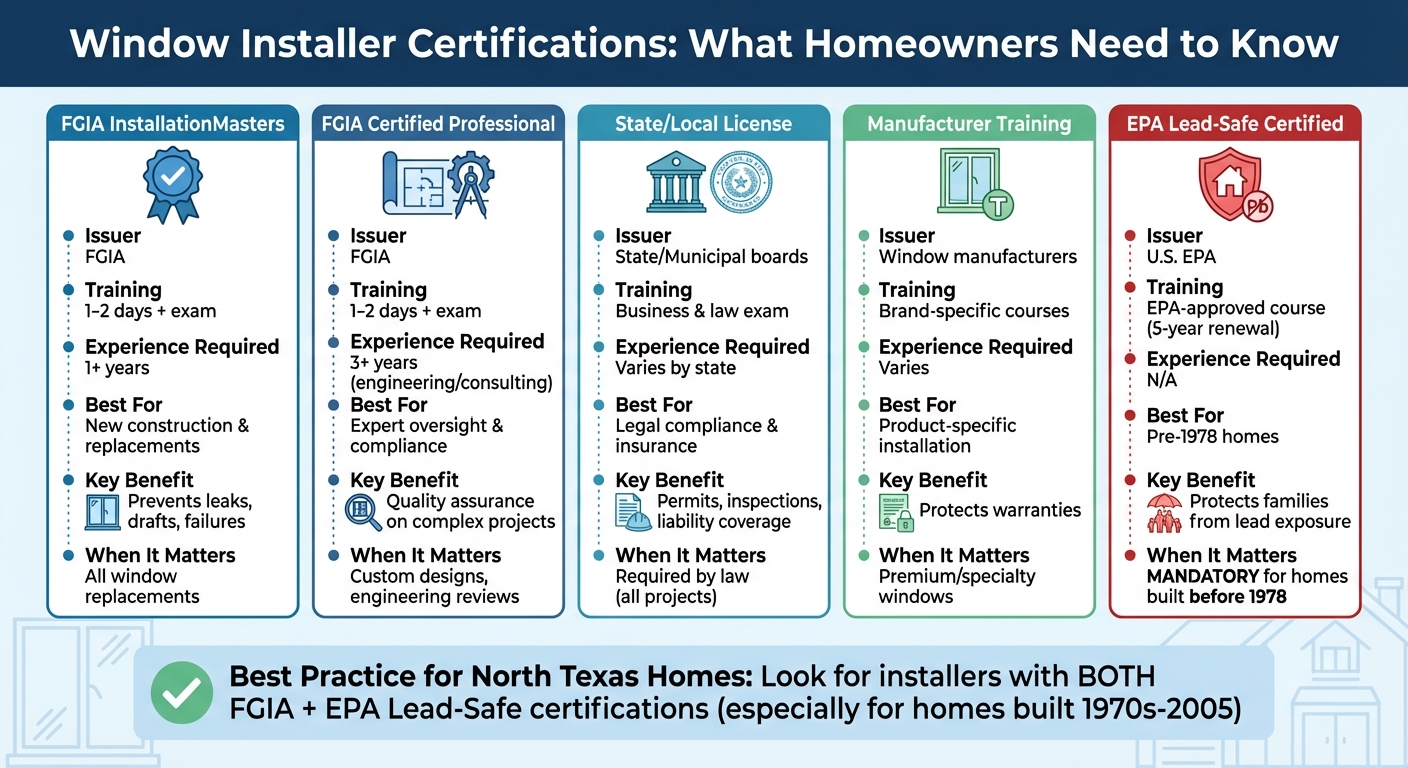
Choosing the right window installer often feels like navigating a maze of certifications. To make things clearer, the table below outlines key certifications, their issuers, requirements, and how they benefit your home. This breakdown will help you understand which credentials truly protect your investment.
| Certification | Issuing Organization | Who It Applies To | Key Requirements | Typical Duration & Renewal | Homeowner Benefits | When This Matters Most |
|---|---|---|---|---|---|---|
| InstallationMasters Certified Installer (Combined) | FGIA | Individual installers | At least 1 year of hands-on experience; 2-day classroom or virtual training; written exam covering AAMA 2400, AAMA 2410, ASTM E2112, and FMA/AAMA standards | 2 days training + exam (no specified renewal period) | Ensures proper installation, from site prep to final maintenance, minimizing leaks, drafts, and long-term failures – ideal for both new construction and replacements | Crucial for window replacement, especially full-frame installations or high-performance products |
| InstallationMasters Certified Professional | FGIA | Non-field experts (engineers, testers, consultants) | 3+ years of experience in engineering, testing, or consulting; 1–2 day training + exam | 1–2 days training + exam | Offers expert oversight on compliance with national standards, ensuring durable and high-performance installations | Necessary for projects involving engineering reviews, custom designs, or third-party quality checks |
| State/Local Contractor License | State licensing boards or municipal building departments | Companies or individual contractors | Passing a business and law exam, meeting minimum experience requirements, carrying liability insurance, workers’ compensation, and sometimes bonding | 1–2 year license term with required renewals | Covers legal compliance, permitting, inspections, and insurance – though it doesn’t guarantee window-specific expertise | Required by law for all projects; best when paired with window-specific certifications |
| Manufacturer-Specific Training | Window/door manufacturers (e.g., Pella, Andersen) | Individual installers or companies | Completion of brand-specific courses focused on product installation | Varies by manufacturer; periodic updates may be required | Protects warranties, ensures proper handling of unique features, and minimizes errors that could void coverage | Ideal for premium or specialty windows with strict warranty rules |
| EPA Lead-Safe Certification | U.S. Environmental Protection Agency | Firm-level certification with at least one Certified Renovator on staff | Completion of EPA-approved training on lead containment, dust control, and cleanup | Firm certification is ongoing; Renovator training valid for 5 years | Protects families from lead exposure during replacements and ensures legal compliance, with proper documentation for resale | Mandatory for homes built before 1978, especially for families with children or pregnant women |
Each certification plays a unique role in safeguarding your home’s energy efficiency, durability, and safety. The table above highlights these distinctions, helping you make informed decisions.
For North Texas homeowners – many of whom live in homes built during the 1970s or earlier – combining FGIA certification with EPA Lead-Safe credentials offers excellent protection. Installers with both certifications demonstrate a strong commitment to quality and safety, especially in older homes where lead exposure and foundation shifts are concerns.
While state licensing ensures contractors meet legal requirements like insurance, bonding, and permits, it doesn’t address the specialized skills needed for proper window flashing or preventing water intrusion. On the other hand, manufacturer-specific training equips installers with the knowledge to handle your chosen windows correctly, preserving warranties and avoiding costly mistakes.
Conclusion
The quality of your window installation is directly tied to the expertise of your installer. Certifications like FGIA InstallationMasters ensure that crucial steps – such as flashing, air sealing, and water management – are done correctly, preventing problems like leaks, drafts, and premature window failure. State licensing provides peace of mind by confirming the installer meets legal and insurance requirements, while EPA Lead-Safe certification is essential for protecting families in homes built before 1978 from harmful lead exposure. Manufacturer-specific training further ensures that warranties remain intact by guaranteeing proper handling and installation of the product.
Verifying these credentials is straightforward and well worth the effort. Ask to see the FGIA InstallationMasters certificate, confirm the contractor’s state license number through your local licensing board, and request proof of EPA Lead-Safe certification if your home was built before 1978. These simple checks can help you avoid costly repairs and wasted energy down the road.
For homeowners in Plano, Frisco, McKinney, Allen, and North Dallas – especially those with homes built between 1990 and 2005 – certified installation is even more critical. Many of these homes still have their original builder-grade aluminum windows, which are notorious for failing under North Texas conditions. Replacing them without proper certification can lead to new issues, such as poor sealing or mismatched materials, compounding existing problems rather than resolving them. Certified installers, on the other hand, consistently deliver noticeable improvements, including lower energy bills and enhanced indoor comfort – often within the first month.
Choosing a certified installer isn’t just about meeting standards; it’s about achieving results. From lower utility costs to a more comfortable living environment, certified installations are designed to handle the challenges of Texas heat, shifting foundations, and severe weather. The difference between certified and non-certified work shows up in your energy savings, comfort, and the longevity of your windows – ensuring they perform as they should for years to come.
FAQs
Why is FGIA InstallationMasters certification essential for window installers in North Texas?
FGIA InstallationMasters certification guarantees that window installers adhere to the highest standards for proper installation, safety, and energy performance. This level of expertise is particularly crucial in North Texas, where the intense heat, fluctuating humidity, and shifting foundations require windows that are not only well-sealed but also built to last.
Certified professionals are trained to address common problems such as drafts, water leaks, and early deterioration. Their expertise ensures that your windows function as they should, delivering consistent comfort, energy savings, and durability over time. By choosing a certified installer, you’re securing quality workmanship that protects your home and your investment.
What is EPA Lead-Safe Certification, and how does it protect homeowners during window replacements?
When replacing windows in homes built before 1978, EPA Lead-Safe Certification plays a crucial role in safeguarding your family’s health. Homes from that era often contain lead-based paint, which can release harmful dust during renovations. Certified contractors are trained to follow stringent protocols designed to contain and clean up lead dust effectively.
This certification ensures that professionals take all necessary precautions to prevent lead contamination. These measures are especially important for protecting children and pregnant women, who are more vulnerable to the health risks associated with lead exposure. By choosing a certified expert, you can feel confident that your home remains a safe and healthy space during and after the window replacement process.
Why is it important to hire a window installer with manufacturer-specific training?
Hiring a window installer who has undergone manufacturer-specific training is a smart way to ensure your windows are installed to the highest standards. This specialized training equips installers with the exact techniques and guidelines needed for each product, which helps to avoid common issues such as drafts, leaks, or early failures.
By choosing a trained professional, you’re not just safeguarding your investment – you’re also ensuring that your windows deliver the comfort, energy savings, and long-term performance they were designed to provide.


