
How Low-E Coatings Reduce Solar Heat Gain in Frisco Homes
Low-E glass windows in Frisco TX are one of the most effective ways homeowners can reduce summer heat, glare, and rising energy bills. In Frisco, Texas, where temperatures regularly exceed 100°F, many homes built between 1990 and 2005 still have builder-grade aluminum or early vinyl windows that allow excessive heat and UV rays inside. These older windows lack modern Low-E coatings, which are specifically designed to reflect solar heat and protect homes from intense Texas sun.
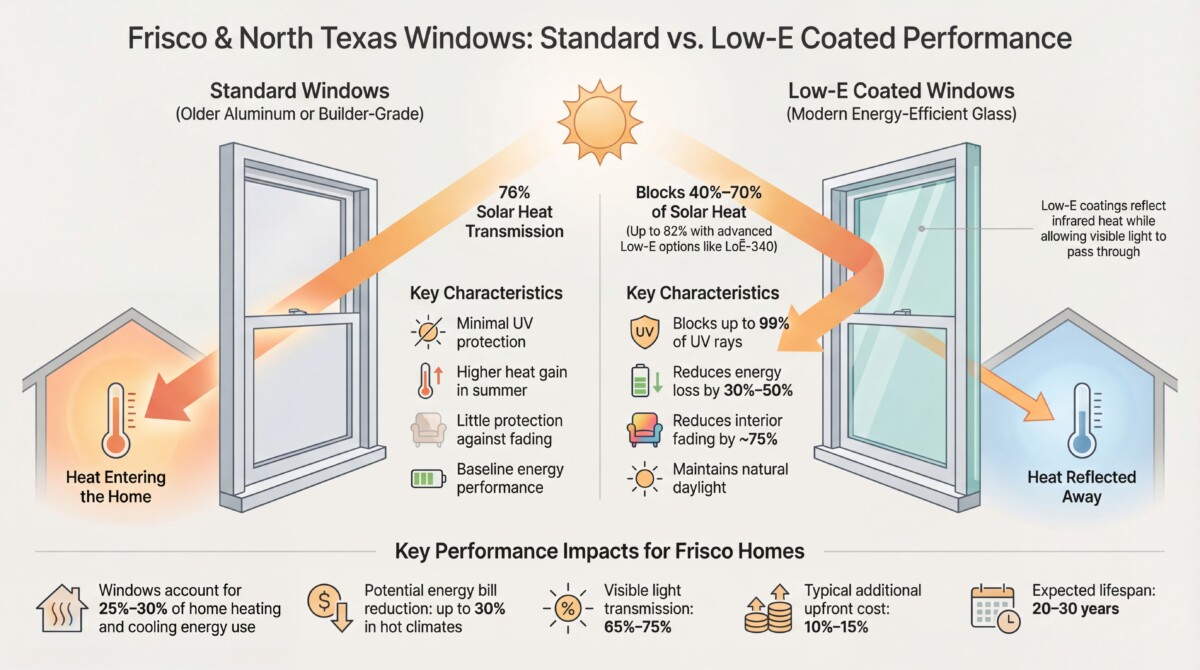
Windows account for roughly 25 to 30 percent of a home’s heating and cooling energy use. Older non-Low-E windows can allow more than 70 percent of sunlight to enter as heat. Modern Low-E glass can reduce energy loss by 30 to 50 percent, lowering cooling costs while improving comfort. If you notice hot spots near windows, fading furniture, or an air conditioner that struggles to keep up in summer, Low-E glass is often the solution.
This guide explains how Low-E coatings work, why they are ideal for Frisco homes, and why proper installation is just as important as the glass itself.
How Low-E Glass Works
What Are Low-E Coatings?
Low-E stands for low emissivity. It refers to an ultra-thin metallic or metal-oxide coating applied to window glass that reduces heat transfer. These coatings are microscopic, thinner than a human hair, yet they significantly change how windows manage heat and light.
Low-E coatings act like a thermal mirror. They reflect infrared heat and block ultraviolet radiation while allowing visible daylight to pass through. This balance is especially important in Frisco, where homeowners want bright interiors without overwhelming heat.
Modern Low-E coatings can reduce energy loss through windows by 30 to 50 percent. They are spectrally selective, meaning they filter out a large portion of solar heat without noticeably darkening rooms.
How Low-E Coatings Control Heat
Sunlight consists of visible light, infrared energy, and ultraviolet radiation. Standard glass allows all three to pass through. Low-E coatings selectively reflect infrared heat and UV rays while allowing natural light to enter.
This keeps interior spaces cooler, reduces strain on air conditioning systems, and protects flooring and furniture from fading.
Types of Low-E Coatings and What Works Best in Texas
Low-E coatings are manufactured using two methods.
Hard-coat Low-E is applied while the glass is hot during manufacturing. It is durable but allows more solar heat to pass through, making it better suited for colder climates.
Soft-coat Low-E is applied to cooled glass in a vacuum chamber using multiple ultra-thin metallic layers. It blocks significantly more heat and is sealed inside insulated glass units for protection.
For Frisco and North Texas homes, soft-coat Low-E glass is the preferred option. It is specifically designed to block intense solar heat while maintaining high visible light transmission.
How Low-E Glass Reduces Solar Heat Gain
Reflecting Infrared Heat
Low-E coatings reflect a large percentage of infrared heat back outside before it enters the home. In Texas conditions, this reflection can reduce solar heat gain by up to 70 percent while still allowing daylight through the glass.
This is especially valuable for west-facing windows that receive intense afternoon sun in Frisco neighborhoods.
Blocking UV Rays and Preventing Interior Fading
Standard glass allows most UV radiation to pass through, which causes fading of floors, furniture, artwork, and fabrics. Low-E glass blocks up to 99 percent of UV rays, reducing fading damage by roughly 75 percent.
This protection works without dark tinting or heavy window coverings, preserving clear views and natural light.
Why Low-E Glass Is Ideal for Frisco Homes
Frisco homes face extreme summer heat, strong UV exposure, and long cooling seasons. Low-E glass is designed to address all three.
By reflecting heat and reducing solar gain, Low-E windows help stabilize indoor temperatures and eliminate hot spots near windows. This allows air conditioning systems to run more efficiently and consistently.
Homes in Frisco often see noticeable reductions in cooling costs after upgrading to Low-E windows, especially when replacing builder-grade glass.
Choosing the Right Low-E Glass for Your Home
Not all Low-E glass performs the same. Selecting the right coating depends on window orientation and sun exposure.
South- and west-facing windows benefit most from strong solar control options such as Cardinal LoĒ-366 or LoĒ-340. These coatings block a high percentage of heat while maintaining good visible light.
North-facing windows receive minimal direct sunlight and can use lighter coatings that maximize brightness.
Large picture windows and sliding glass doors often benefit from advanced options such as Cardinal Quad LoĒ-452⁺, which provides excellent heat rejection without sacrificing clarity.
Matching glass performance to each side of the home produces the best comfort and energy results.
Why Installation Quality Matters as Much as the Glass
Even the best Low-E glass will underperform if installed incorrectly. Poor installation can reduce window efficiency by more than 25 percent.
Many older homes in Frisco were built using rushed installation methods that relied heavily on caulking and minimal sealing. These shortcuts lead to air leaks, water intrusion, and premature window failure.
FGIA-certified installation follows ASTM E2112 standards, ensuring windows are installed level, plumb, and square. Certified installers use proper shimming, low-expansion foam insulation, and professional sealing to maintain long-term performance.
Correct installation also protects the insulated glass unit seal, preserves argon gas fill, and maintains manufacturer warranties.
Long-Term Benefits of Low-E Windows in Frisco
Low-E windows typically last 20 to 30 years when properly installed. Although they may cost 10 to 15 percent more upfront than standard glass, the long-term savings often outweigh the initial investment.
Homeowners benefit from lower energy bills, improved comfort, reduced HVAC wear, quieter interiors, and better protection for furnishings.
For Frisco homeowners planning long-term ownership, Low-E windows are one of the highest ROI upgrades available.Final Thoughts
Low-E coatings are one of the most effective tools for managing solar heat in Frisco homes. By reflecting infrared heat, blocking UV rays, and allowing natural light, they provide cooler interiors, lower energy bills, and long-term comfort.
Final Thoughts
When paired with proper FGIA-certified installation, Low-E windows deliver consistent performance year after year. Whether replacing a few windows or upgrading an entire home, choosing the right Low-E glass and installer ensures your investment performs as intended in North Texas conditions.