
NFRC vs. FGIA: Window Testing Standards Compared
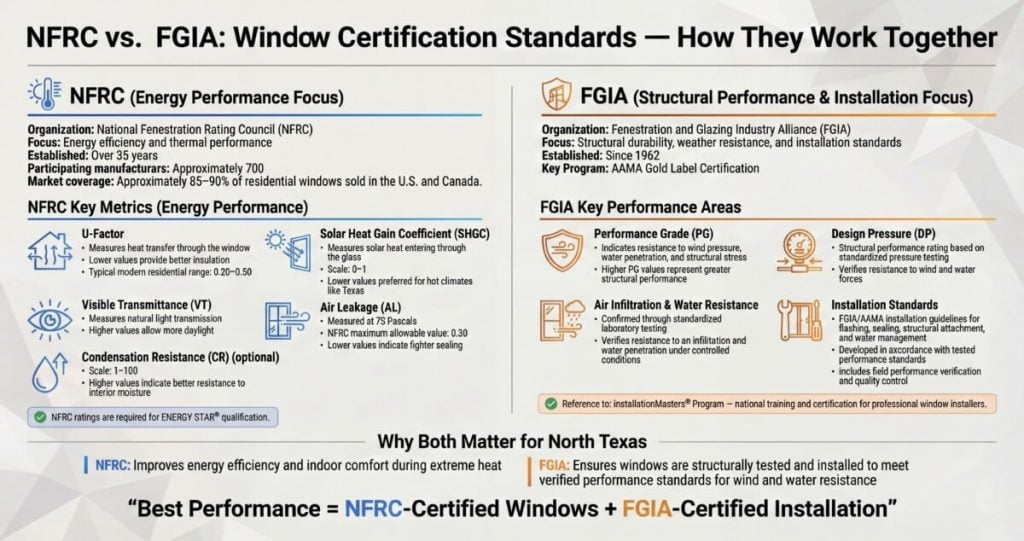
When replacing windows in homes built 20–35 years ago in Plano and Frisco, it’s important to understand the two key certification systems – NFRC and FGIA. These standards ensure windows meet performance benchmarks for energy efficiency and structural durability. With North Texas’ extreme heat and storms, certified windows help reduce energy bills and protect against weather damage. NFRC focuses on energy ratings like heat loss and solar heat gain, while FGIA evaluates structural strength and proper installation. Together, they provide a reliable way to choose windows that perform well in the unique climate of this region.
TL;DR:
NFRC tells you how energy-efficient a window is.
FGIA ensures the window is structurally tested and installed correctly.
For North Texas homes, you need both.
What is NFRC?
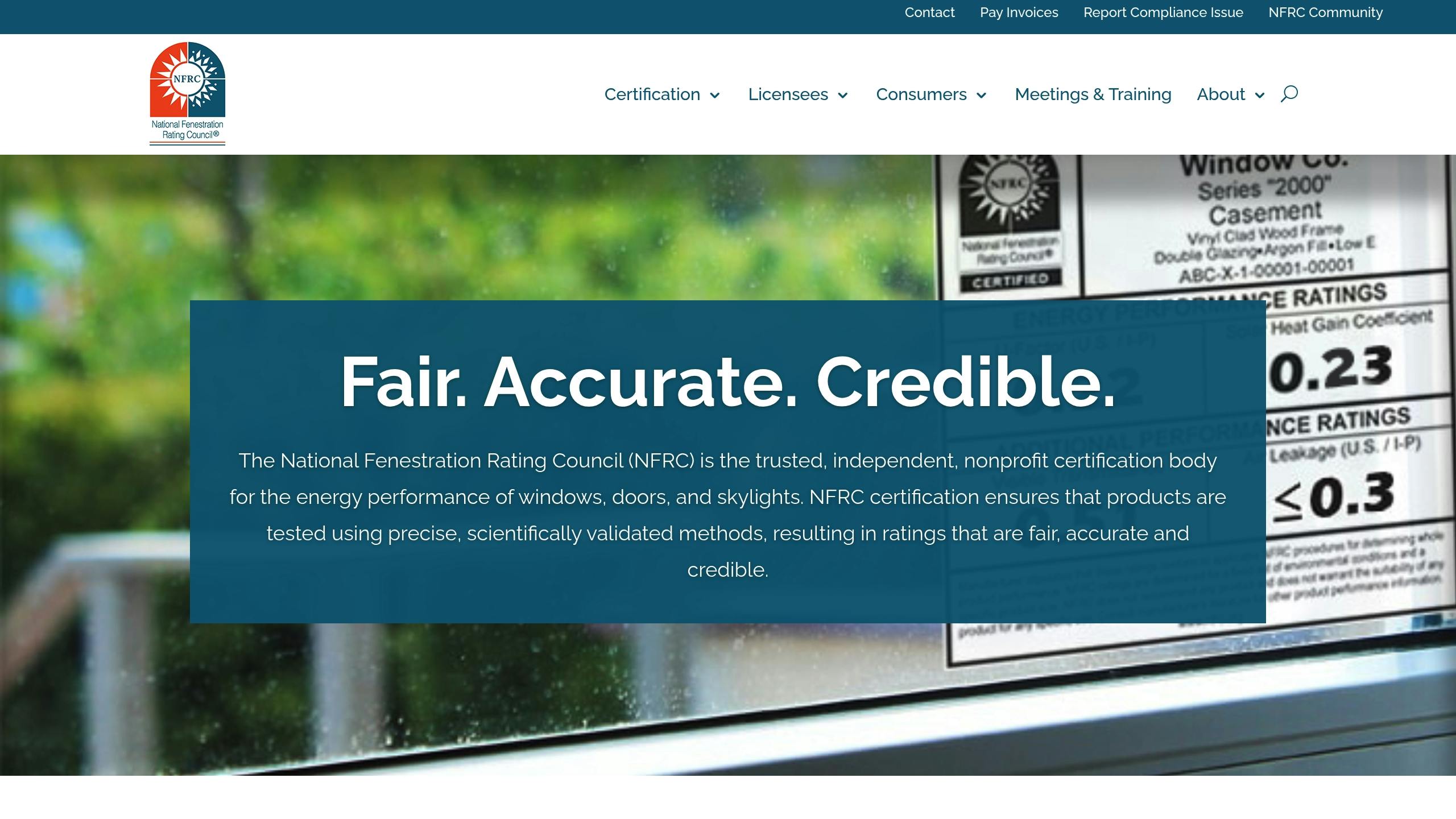
The National Fenestration Rating Council (NFRC) is a nonprofit organization dedicated to providing standardized energy performance ratings for windows, doors, and skylights. For over 35 years, the NFRC has established clear benchmarks that allow homeowners to compare energy efficiency across different products. It also serves as the official certification body for the ENERGY STAR program, meaning that a product must have NFRC ratings to qualify for the ENERGY STAR label.
Currently, around 700 window manufacturers participate in the NFRC certification process. These ratings are displayed on approximately 85–90% of windows sold in the U.S. and Canada. Certification involves rigorous testing in controlled labs, computer simulations, independent inspections, and inclusion in the Certified Products Directory. As the NFRC emphasizes, “If it doesn’t have the label, it isn’t NFRC certified”. For homeowners in Plano and Frisco, this label is particularly useful, as it provides detailed information about how a window handles heat and sunlight, crucial factors in the North Texas climate.
NFRC Performance Metrics
The NFRC label highlights five key metrics that evaluate various aspects of a window’s performance:
- U-Factor: U-Factor typically ranges from 0.20 to 0.50 for modern residential windows, with lower values providing better thermal performance.
- Solar Heat Gain Coefficient (SHGC): This indicates how much solar radiation enters through the window, rated on a scale from 0 to 1. A lower SHGC is especially important in North Texas, where reducing heat gain during summer is a priority.
- Visible Transmittance (VT): This measures the amount of natural light that passes through the glass. Higher VT values allow more daylight into your home.
- Air Leakage (AL): Measured at a pressure of 75 Pascals (1.57 psf), this indicates how much air can pass through the window. Lower values help reduce drafts and moisture problems.
- Condensation Resistance (CR): An optional rating, this measures a window’s ability to resist interior moisture buildup. Scores range from 1 to 100, with higher numbers offering better resistance.
Stephen Aki of Technoform North America explains that “SHGC requirements can vary depending on the region and climate where a fenestration product is installed, with hotter climates, such as Texas, requiring a lower SHGC to reduce heat transfer”.
These ratings are essential for homeowners in North Texas, where extreme heat and occasional severe weather demand windows that can handle both energy efficiency and durability.
How to Read NFRC Labels
Once you understand the metrics, reading an NFRC label becomes straightforward. The most important numbers – SHGC and U-Factor – work together to balance solar heat control and insulation. A high VT rating can bring in more daylight, but coatings designed to lower SHGC may slightly reduce light transmission. For air leakage, look for a rating of 0.3 or lower to minimize drafts.
It’s also a good idea to keep the NFRC label on your windows after installation. This label may be needed to qualify for energy-efficiency tax credits or utility rebates. For additional guidance, homeowners can explore tools like the NFRC Window Selection Tool or the Efficient Windows Collaborative database to find products tailored to their specific climate.
Next, we’ll compare these energy performance metrics with FGIA’s focus on structural strength to give you a complete picture of window durability in North Texas.
What is FGIA?

While the National Fenestration Rating Council (NFRC) focuses on energy efficiency, the Fenestration and Glazing Industry Alliance (FGIA) emphasizes structural performance and installation quality.
FGIA develops standards and testing protocols for windows, doors, and skylights. Since 1962, it has managed the AAMA Gold Label Certification Program, which ensures windows meet rigorous performance benchmarks. FGIA describes its certification as “the original third-party window, door and skylight performance program”, allowing manufacturers to demonstrate their products’ reliability to customers.
Beyond the Gold Label, FGIA oversees other certification programs, such as the AAMA Verified Components Program, the Profile Certification Program, and the Insulating Glass (IG) Certification. Additionally, it offers the InstallationMasters program, a national training and certification initiative for residential and light commercial window installers. For homeowners in Plano and Frisco, where severe weather and strong winds are common, FGIA certification serves as reassurance that windows can withstand the demands of North Texas storms.
FGIA Performance Metrics
FGIA’s performance metrics evaluate how well a window handles physical stress such as wind pressure, water penetration, and air infiltration. One key measure is the Performance Grade (PG), which represents the level of pressure a window assembly can withstand during standardized laboratory testing.
Higher PG ratings indicate increased resistance to wind pressure and water intrusion, providing greater protection during severe weather events common in North Texas. These ratings reflect structural performance under test conditions and are not direct wind-speed guarantees.
In regions like Plano and Frisco, where strong storms and driving rain are a concern, selecting windows with appropriate PG ratings helps ensure long-term durability and weather resistance.
FGIA Installation Standards
FGIA sets technical guidelines for proper window installation, ensuring long-term performance. These standards include frame deflection testing, water resistance verification, and field performance checks conducted in accordance with current AAMA/FGIA installation guidelines.
Adhering to FGIA installation standards is crucial. Poor installation can void warranties and compromise a window’s ability to resist air and water infiltration. FGIA’s InstallationMasters program is designed to help installers avoid errors, improve efficiency, and maximize the benefits of high-quality windows. For homeowners in Plano and Frisco upgrading older homes, FGIA-certified installation addresses common issues like drafts, air leaks, water intrusion, and noise transfer often found in builder-grade aluminum or early vinyl windows. At Optimal Windows, we follow FGIA-certified practices to ensure your home remains comfortable and well-protected against North Texas weather.
These standards apply specifically to full window replacement and certified installation, not short-term repair or patch solutions.
NFRC vs. FGIA: How They Differ and Work Together
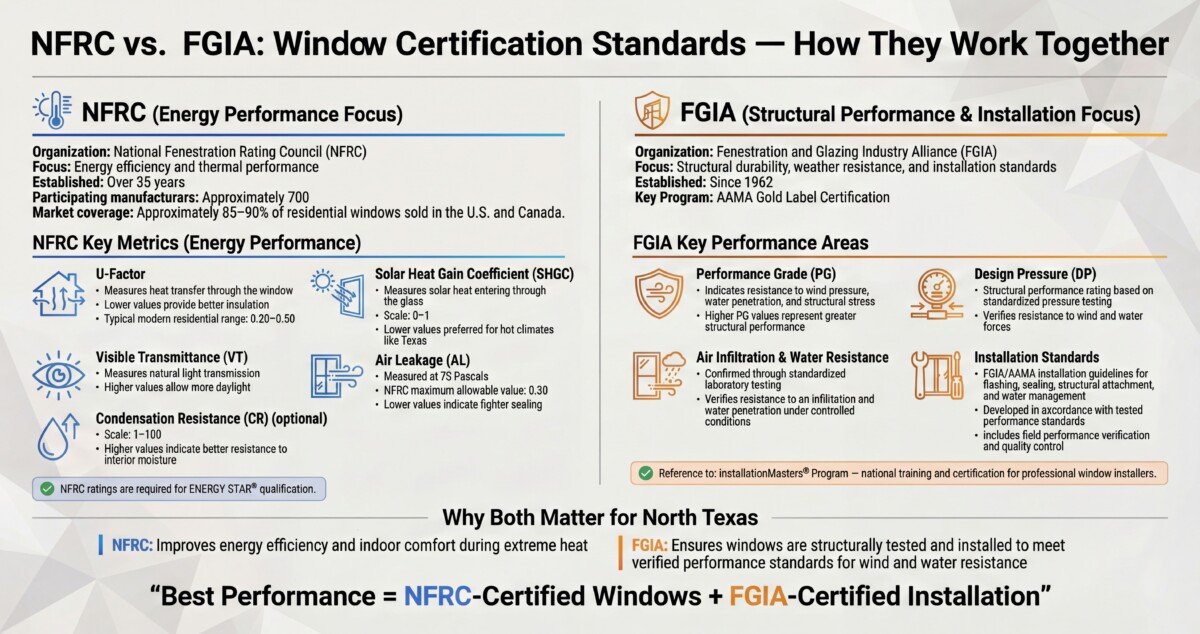
Previously, we looked at the individual roles of NFRC and FGIA in window performance. Now, let’s dive into how these two organizations work together to enhance your home’s comfort and durability.
Energy Performance vs. Structural Performance
NFRC and FGIA focus on different, but equally important, aspects of window performance. The NFRC specializes in energy ratings – such as U-Factor, Solar Heat Gain Coefficient (SHGC), Visible Transmittance (VT), and Air Leakage – to measure how well windows insulate and manage solar heat. These ratings are especially important for keeping cooling costs manageable during the scorching North Texas summers.
FGIA, on the other hand, oversees the AAMA Gold Label Certification Program, which tests windows for structural strength and durability. This includes evaluating factors like Design Pressure (DP) for wind resistance, water penetration resistance, and air infiltration. While NFRC ratings focus on energy efficiency, FGIA certifications ensure that windows can withstand high winds and heavy rain without leaking or failing structurally.
For homes in Texas, where summers are intense and storms can be severe, both standards are crucial. A lower SHGC can significantly reduce heat transfer, helping keep cooling costs down during long summer months. At the same time, FGIA’s Design Pressure ratings verify that windows are structurally tested to resist wind pressure and water intrusion under demanding conditions. Together, these standards provide a comprehensive approach to protecting your home in North Texas’s challenging climate.
Why Both Standards Matter in North Texas
North Texas homeowners face a unique combination of weather challenges: extreme heat, occasional severe storms, and aging builder-grade windows. NFRC certifications ensure that replacement windows help lower energy bills during those 100°F summer days by reducing cooling demands. Meanwhile, FGIA certifications guarantee that new windows resist water intrusion during heavy rains and maintain their structural integrity during strong wind events.
However, even the best NFRC-rated window can fall short without proper installation. That’s where FGIA’s InstallationMasters program comes into play. According to FGIA:
The [InstallationMasters] program is specifically designed to help installers: Avoid costly callbacks, Improve energy efficiency, Work more efficiently… [and] Maximize product benefits.
If a window isn’t installed correctly, it may develop drafts or leaks, no matter how good its energy ratings are.
For homes built 20 to 35 years ago, both standards address common problems. NFRC ratings help guide homeowners in replacing outdated single-pane or early low-e windows, which often lead to high energy bills. Meanwhile, FGIA standards ensure that new windows avoid the usual pitfalls of original builder-grade installations, such as air leaks, water damage, and structural issues. At Optimal Windows, we follow FGIA-certified installation practices to make sure your windows deliver the energy efficiency and durability promised by their NFRC labels.
How to Choose Windows with NFRC and FGIA Certifications
Find certified windows for reliable performance in your Plano or Frisco home.
What to Look for When Buying Windows
When shopping for windows, check for certifications. NFRC-certified windows come with labels that provide key performance metrics like U-Factor, Solar Heat Gain Coefficient (SHGC), Visible Transmittance (VT), and Air Leakage. These numbers help you evaluate energy efficiency and overall performance.
For homes in North Texas, focus on windows with a low SHGC to minimize heat from the sun during the sweltering summer months. Texas’ hot climate makes this particularly important, as lower SHGC values help reduce heat gain and improve indoor comfort. Additionally, look for an Air Leakage rating of 0.3 or lower. Windows meeting this standard can cut your utility costs by up to 13% on average.
Another key consideration is AAMA Gold Label Certification, which guarantees structural strength and durability. This certification means the window has passed stringent independent testing for air leakage (no more than 0.30 cubic feet per minute at 25 mph), water resistance (withstanding rain driven by 33 mph winds), and wind pressure (equivalent to 94 mph). The Gold Label also includes twice-yearly unannounced inspections at manufacturing plants, ensuring consistent quality.
While choosing certified windows is essential, their performance depends heavily on proper installation.
Why Certified Installation Matters
Even the best-rated windows won’t perform as promised if they’re not installed correctly. NFRC energy ratings assume proper installation, but many older homes with builder-grade windows – especially those installed 20 to 35 years ago – lack adequate sealing, flashing, and mechanical attachments. These shortcuts often lead to drafts, air leaks, and water damage over time.
The InstallationMasters program by FGIA ensures installers use proper techniques for sealing, flashing, and attachment. This program complements NFRC and FGIA standards, addressing common issues found in older installations.
At Optimal Windows, we rely on FGIA-certified installation methods for every replacement project in Plano and Frisco. This process eliminates frequent problems in older homes, such as air leaks around brick exteriors, poor flashing, and inadequate sealing. By following these best practices, we ensure your new windows deliver the energy savings and comfort promised by their NFRC labels.
Benefits of Standards-Based Window Replacement in Plano and Frisco
When it comes to upgrading your windows in Plano and Frisco, choosing products that meet NFRC and FGIA standards offers more than just technical peace of mind – it directly improves your daily living experience. By replacing outdated builder-grade windows with NFRC-rated and FGIA-certified options, homeowners can enjoy better comfort, lower energy bills, and enhanced durability tailored to the demands of North Texas.
Energy Efficiency and Comfort
NFRC-certified windows provide measurable performance data that can make a noticeable difference in your home’s energy use and indoor comfort. With summer temperatures in Plano and Frisco often soaring past 100°F, windows with a lower Solar Heat Gain Coefficient (SHGC) – ideally between 0.20 and 0.25 – help block excessive heat from entering your home. This reduces the strain on your air conditioning system, leading to lower utility bills and a more comfortable living space.
Another key factor is air leakage. Windows with an Air Leakage (AL) rating of ≤ 0.3 are designed to minimize drafts and maintain consistent indoor humidity levels. Since most humidity transfer in a home occurs through air leaks, having properly rated windows ensures a more stable and comfortable environment, even in North Texas’s humid climate.
Durability and Long-Term Performance
While energy efficiency improves comfort and savings, FGIA certification focuses on durability and structural reliability. The AAMA Gold Label, part of FGIA’s certification programs, signifies that windows have undergone rigorous third-party testing for water resistance, wind pressure, and overall structural integrity.
In the Plano and Frisco area, these windows are built to withstand local challenges, such as heavy rain and high winds. For example, windows with a DP50 rating can handle wind speeds up to 173 mph, offering reassurance during severe weather conditions.
Proper installation is just as important as the product itself. FGIA-certified installation ensures that windows are sealed, flashed, and secured correctly, reducing the risk of common issues like drafts around brick exteriors, water leaks, and unwanted noise. This attention to detail not only enhances comfort but also helps preserve the value of your home for years to come.
FAQs
What’s the difference between NFRC and FGIA certifications for windows?
When it comes to understanding window certifications, NFRC and FGIA each focus on distinct but equally important aspects.
The NFRC certification centers on a product’s energy performance. It provides ratings for windows, doors, and skylights based on factors like the U-factor, which measures heat retention; Solar Heat Gain Coefficient (SHGC), which indicates how well the product blocks sunlight; visible light transmission, showing how much natural light passes through; air leakage, which reflects how draft-proof the product is; and condensation resistance, which gauges its ability to resist moisture buildup. These ratings are designed to help homeowners make informed comparisons about energy efficiency.
On the other hand, the FGIA certification emphasizes product quality and installation standards. It ensures that windows and doors meet rigorous durability requirements and that installations adhere to best practices, such as correct sealing and framing techniques. FGIA-trained installers are certified to deliver reliable, long-lasting results.
In summary, NFRC certification helps you understand a window’s energy efficiency, while FGIA certification guarantees the product’s durability and proper installation. Together, these certifications are crucial for North Texas homeowners looking for windows that are both energy-efficient and built to last.
What’s the difference between NFRC and FGIA certifications, and why do they matter for North Texas homeowners?
The NFRC certifications provide trustworthy performance ratings for windows, focusing on key factors like U-factor, solar heat gain coefficient (SHGC), and air leakage. These ratings are especially useful for homeowners in North Texas, helping them select energy-efficient windows that maintain a comfortable indoor temperature – warmer during the winter and cooler during the summer.
Meanwhile, FGIA certifications, including programs like InstallationMasters training, emphasize proper window installation that meets rigorous industry standards. Quality installation plays a critical role in ensuring the windows perform as rated by the NFRC. It helps address common problems such as drafts, air leaks, and water intrusion – issues that are particularly relevant given the unique climate and construction conditions in North Texas.
Why does certified window installation matter for your home?
Certified window installation guarantees your windows will function as they should by meeting established industry standards. Professional installers focus on key details like accurate measurements, proper sealing, and careful inspections to improve energy efficiency, stop air leaks, and ensure your windows stand the test of time.
Opting for certified installation gives you peace of mind, knowing your windows will provide the comfort, energy savings, and reliability you’re looking for, while minimizing problems like drafts, water damage, or early wear and tear.


