
Do Energy-Efficient Windows Pay for Themselves?
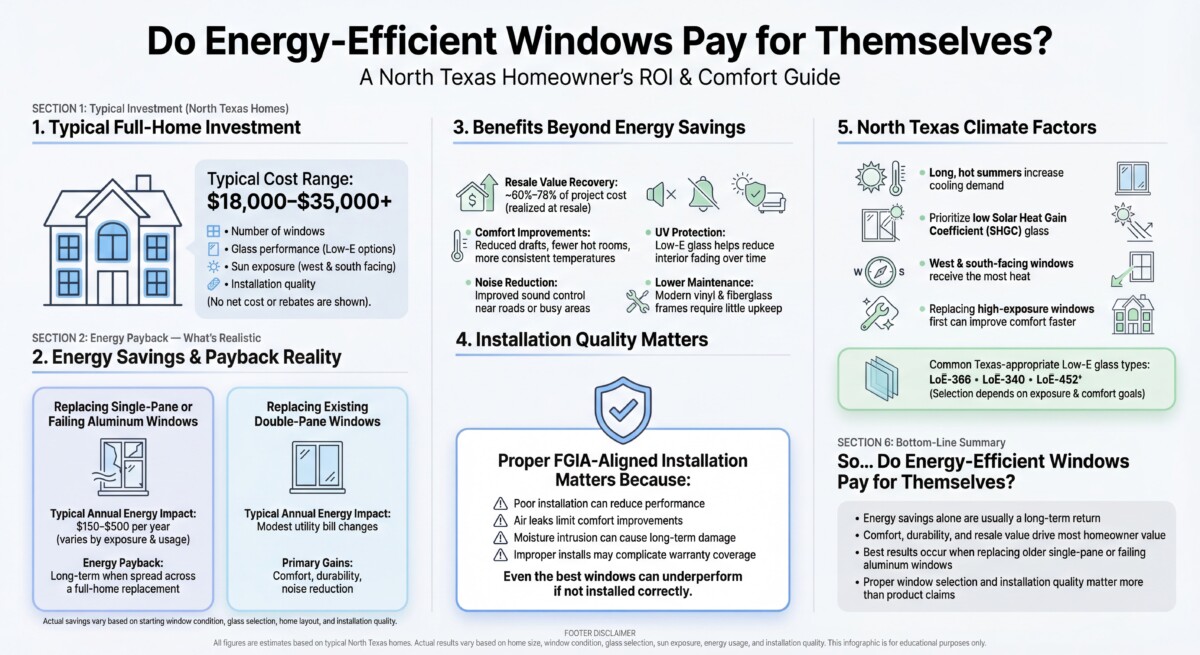
Replacing windows in a 20–35-year-old North Texas home can feel like a daunting expense, especially with costs ranging from $18,000 to $35,000 for a full home vinyl window replacement in Plano area homes. But when you consider the rising energy bills caused by aluminum-frame windows, drafts, and outdated glass, the investment can provide long-term value over time. New energy-efficient windows reduce heating and cooling costs, improve comfort, and even increase your home’s resale value. For many homeowners in Plano, Frisco, McKinney, and North Dallas, the savings and benefits can make all the difference.
Here’s the bottom line:
- Energy Savings: Replacing single-pane or failing aluminum windows typically saves $150–$500 per year, depending on sun exposure, glass selection, and home efficiency.
- Payback: From energy savings alone, payback is generally long-term, but comfort and resale value significantly improve overall return.
- Home Value: New windows recoup 60%–78% of their cost through resale value.
- Comfort: Modern windows eliminate drafts, reduce noise, and block harmful UV rays.
However, the key to seeing these returns lies in proper installation. Poorly installed windows can leak air, fail prematurely, and void warranties. FGIA-certified installers, like those at Optimal Windows, ensure your investment delivers the performance and savings you expect. Replacing windows is often a once-in-a-lifetime decision, make it count.
How Long It Takes to Recoup Your Investment
National Payback Estimates
The time it takes to recover the cost of energy-efficient windows varies widely based on the type of windows being replaced, the condition of the existing frames, and local energy costs. National studies consistently show that homeowners replacing single-pane or failing aluminum windows see the greatest energy savings, as these older systems allow significant heat transfer and air leakage. In these cases, annual savings can be noticeable, though payback from energy savings alone is typically long-term when spread across a full-home replacement.
By comparison, replacing existing double-pane windows usually delivers smaller, comfort-focused gains rather than dramatic utility bill reductions. Annual energy savings in these scenarios are often modest, which can extend the payback period well beyond what most homeowners would consider a short-term financial return. These differences underscore an important reality: the starting condition of your windows and the quality of the installation has a far greater impact on performance and long-term value than the window upgrade alone.
“Replacement windows will not pay for themselves in energy savings in any appreciable or practical sense.” – Lee Wallender, Home Remodeling Expert[1]
Proper installation plays a crucial role in ensuring energy efficiency. Even the most advanced windows can fall short if air leaks are caused by poor installation[2].
Payback Periods in North Texas
In North Texas, national window-performance trends shift due to the region’s intense heat and extended cooling season. Homeowners in Plano, Frisco, McKinney, and North Dallas experience long, high-temperature summers that drive air-conditioning costs for much of the year. Because of this, windows with a low Solar Heat Gain Coefficient (SHGC) play an important role by limiting the amount of solar heat entering the home and reducing cooling demand during peak summer months.
Many homes built 20–35 years ago in this area still rely on builder-grade aluminum-frame windows. Older aluminum-frame windows often have very high U-factors and SHGC values, allowing significant heat transfer and solar gain compared to modern ENERGY STAR–rated systems. Upgrading to newer windows with improved glass coatings and insulated frames can noticeably improve indoor comfort, reduce hot-spot rooms, and help stabilize interior temperatures. While energy savings alone typically represent a long-term return when spread across a full-home replacement, North Texas homeowners often value the immediate gains in comfort, performance, and durability – benefits that depend just as much on proper window selection and professional installation as they do on the window product itself.
What Affects Your Return on Investment
The Age and Condition of Your Current Windows
The condition and type of windows you currently have play a big role in determining your return on investment. If you’re upgrading from single-pane or failing builder-grade aluminum windows, performance improvements are typically more noticeable than when replacing newer double-pane windows. While utility bill reductions can occur, the primary benefits are often improved comfort, reduced drafts, and better temperature consistency rather than a short-term financial payback.
In areas like Plano, Frisco, McKinney, and North Dallas, many homes built 20 to 35 years ago still feature builder-grade aluminum windows. These older windows often show signs of wear, such as condensation, drafts, frame damage, or difficulty opening and closing. If you’re noticing these issues, replacing them can be a smart financial decision. However, if your windows are structurally intact but just a little drafty, cost-effective fixes like weatherstripping or caulking might be worth considering before committing to a full replacement[6].
Next, let’s explore how the choice of materials and glass technology can further impact your energy savings.
Frame Materials and Glass Technology
The materials used in your window frames and the type of glass installed are major factors in determining energy efficiency. Modern vinyl and fiberglass frames offer excellent thermal resistance compared to traditional aluminum frames, which tend to conduct heat easily and reduce the effectiveness of even the best glass[5].
In North Texas, where keeping your home cool is a top priority, selecting windows with a low Solar Heat Gain Coefficient (SHGC) is critical. A low SHGC minimizes the amount of solar heat entering your home, reducing the workload on your air conditioning system[2]. Additionally, advanced Low-E (low-emissivity) coatings on glass reflect heat while still allowing natural light to brighten your home. These coatings can significantly reduce UV exposure, helping slow fading of interior furnishings over time.
“Heat gain and heat loss through windows are responsible for 25%–30% of residential heating and cooling energy use.”
Optimal Windows provides an array of Cardinal LoĒ glass options tailored for Texas conditions. For example, LoĒ‑366 balances efficiency and comfort, while LoĒ‑340 offers superior solar control for west- and south-facing windows that endure harsh afternoon sun. Choosing the right glass for your home’s specific orientation can significantly improve comfort and lower energy costs.
However, even the best materials and glass won’t perform as expected without proper installation.
Installation Quality
The performance of your windows hinges on how well they are installed. Even the most advanced windows can fall short if installation is done poorly. Improper installation may lead to air leaks, allowing conditioned air to escape and reducing your home’s overall efficiency. Key steps such as proper air sealing, flashing, and insulating the window frame are essential to preventing drafts and moisture-related issues.
FGIA-certified installation follows manufacturer guidelines and established industry standards, helping protect your investment and reduce the risk of performance issues that can complicate warranty coverage. Poor installation can also lead to water intrusion, rot, or mold, resulting in repairs that may outweigh any potential energy savings. After installation, it’s wise to verify proper sealing by checking for air leaks to ensure the windows are performing as intended.
Local Energy Costs and Climate
Finally, local energy costs and climate conditions play a significant role in determining overall return. In North Texas, where long, hot summers are the norm, air conditioning runs heavily for much of the year. This makes windows with a low Solar Heat Gain Coefficient (SHGC) especially important for limiting solar heat gain and reducing cooling demand. With windows accounting for roughly 25–30% of residential heating and cooling energy use, managing unwanted heat gain can contribute to improved comfort and more efficient system operation over time.
Rooms with west-facing windows or those exposed to direct afternoon sun tend to benefit the most from high-performance glass. Replacing windows in these high-exposure areas first can improve comfort more quickly and reduce strain on the HVAC system compared to a full-home replacement done all at once. By prioritizing these high-impact zones, homeowners often experience earlier comfort improvements while spreading the overall investment more strategically.
How to Calculate Your Payback Period
Basic Payback Calculation
Figuring out your payback period is straightforward with this formula:
Total Project Cost ÷ Annual Energy Savings = Years to Payback
For example, if your window replacement project costs $10,000 and you save $400 annually on energy bills, the payback period would be 25 years.
But there’s more to consider. Factor in resale value using this formula:
ROI = [(Total Energy Savings + Home Value Increase) – Initial Investment] ÷ Initial Investment × 100
Studies show that homeowners typically regain about 60%–70% of their window replacement costs in increased home value when they sell their home, with some reports showing recovery rates as high as 78% depending on market conditions and project scope. This value is realized at resale rather than as immediate cash return, but it remains an important part of the overall long-term value of window replacement.
Tax incentives and rebates for energy-efficient upgrades can change over time and may be limited or unavailable depending on the year and product. Because of this variability, homeowners should view energy savings, comfort improvements, and resale value as the primary drivers of return rather than relying on incentives to shorten payback timelines.
These basic considerations provide a foundation, but in North Texas, local climate conditions and home-specific factors can further influence overall performance and value.
North Texas-Specific Factors
The intense heat in North Texas makes energy-efficient windows an important upgrade for managing cooling demand and improving indoor comfort. Choosing windows with a low Solar Heat Gain Coefficient (SHGC) helps limit solar heat entering the home, which can reduce hot spots and ease the workload on air-conditioning systems during peak summer months.
South- and west-facing windows deserve special attention, as they receive the most direct afternoon sun in cities like Plano and McKinney. Replacing windows in these high-exposure areas first can deliver noticeable comfort improvements more quickly than a full-home replacement, particularly in rooms that struggle with excessive heat.
For homes with significant sun exposure, advanced glass coatings such as Cardinal LoĒ-340 or LoĒ-452⁺ are commonly used to enhance solar control. These options are designed for sun-heavy environments and can help improve temperature consistency when paired with proper installation. By prioritizing the most exposed windows first, homeowners can address comfort issues strategically and phase additional replacements over time as needed.
Benefits That Go Beyond Energy Savings
Better Comfort and Less Noise
One of the first things homeowners notice after installing energy-efficient windows is improved indoor comfort. During cooler North Texas winters, these windows help keep interior glass surfaces warmer, reducing the cold drafts commonly felt near older windows. According to ENERGY STAR, warmer interior surfaces can significantly enhance comfort, even when outdoor temperatures drop.
During sweltering Texas summers, advanced coatings on modern windows help minimize solar heat gain, allowing rooms to stay more comfortable during the hottest parts of the day. Features such as double- or triple-pane glass, argon gas fills, and tight weatherstripping improve temperature consistency while also reducing outside noise. For homes near busy roads in Plano or McKinney, this can noticeably soften traffic sounds. Modern window designs also resist interior condensation, helping protect window sills and surrounding walls from moisture-related damage.
Low-E glass coatings further enhance performance by limiting UV exposure, which helps slow fading of wood floors, furniture, and interior finishes over time.
Better Appearance and Higher Resale Value
Old, outdated windows can make even a well-maintained home feel tired. Replacing them with modern, energy-efficient options can noticeably refresh a home’s appearance and improve overall curb appeal. As ENERGY STAR notes, updating older windows can improve both the visual appeal and perceived value of a home:
“Replacing your old windows with clean-looking ENERGY STAR–rated windows can improve both the curb appeal and the value of your home.”
For homeowners thinking long-term, resale data supports this impact.
Studies show that window replacement projects typically recover about 60%–70% of their cost at resale, with some upgrades reaching recovery rates as high as 78% depending on market conditions and project scope. Beyond appearance, modern vinyl and fiberglass frames are largely maintenance-free, eliminating the need for painting or sealing and reducing concerns about rot or deterioration.
Architectural upgrades such as bay or bow windows can further enhance curb appeal, particularly in competitive markets like Frisco and Allen, where buyers value move-in-ready homes with lower long-term maintenance and energy costs.
New Windows ROI. How long would it take to get my money back?
Conclusion: Do Energy-Efficient Windows Pay for Themselves?
Whether energy-efficient windows “pay for themselves” depends heavily on the condition of the existing windows, the home’s layout, and the homeowner’s priorities. For many 20–35-year-old homes in North Texas – particularly those still using single-pane or failing builder-grade aluminum windows – replacement can deliver meaningful improvements in comfort, durability, and long-term value. While energy savings alone are typically a long-term return rather than a quick payback, homeowners often benefit from more consistent indoor temperatures, reduced drafts, lower peak cooling demand, and increased resale appeal, with studies showing 60%–78% of window replacement costs recovered at resale.
Achieving these benefits depends heavily on proper installation. Even high-quality windows can underperform if they are not installed correctly. Poor air sealing or flashing can allow air and moisture intrusion, limit performance, and complicate warranty coverage. In North Texas, where extreme heat and prolonged sun exposure are part of everyday conditions, proper flashing, insulation, and air sealing are essential to controlling solar heat gain and maintaining comfort. Simply put, long-term performance depends as much on how the window is installed as on the window itself.
How Proper Installation Affects Your Return
FGIA-certified installation isn’t just an extra layer of assurance – it’s the foundation of your windows’ performance. Without proper installation, even high-quality energy-efficient windows can fall short of expectations. Certified professionals understand the nuances of North Texas homes, whether they’re built with brick veneer, wood framing, or stucco exteriors. They follow manufacturer guidelines for air sealing, flashing, and insulation to help prevent air and moisture intrusion that can erode comfort and long-term performance. This disciplined approach protects your investment and helps ensure your windows deliver the comfort, durability, and reliability homeowners expect.
Working with Local Window Replacement Experts
For homeowners in Plano, Frisco, McKinney, Allen, and North Dallas, partnering with experienced local installers makes a meaningful difference. At Optimal Windows, we focus on upgrading 20–35-year-old homes with modern, energy-efficient windows installed to FGIA-certified standards. We’re familiar with the common issues found in builder-grade aluminum windows throughout this region with drafts, air leaks, noise, and poor sealing around brick exteriors, and we know how to address them properly.
We offer a range of Cardinal LoĒ glass options to help homeowners choose solutions tailored to their home’s specific sun exposure and comfort needs. Whether you’re managing intense heat from west-facing windows or addressing condensation concerns on cooler, north-facing elevations, we guide you toward the right combination of frame materials and glass packages. Our process ensures careful selection and professional installation designed to help windows perform as intended, supporting long-term comfort, durability, and resale value.
FAQs
How can I make sure my energy-efficient windows are installed correctly?
Proper installation plays a pivotal role in how well energy-efficient windows perform. Even high-quality windows can fall short if they aren’t installed correctly. To protect your investment, choose installers who are FGIA-certified and follow manufacturer-recommended practices for sealing, flashing, and quality control. After installation, windows should operate smoothly with no visible gaps or misalignments. Verifying proper air sealing helps ensure long-term comfort and durability.
How long does it take for energy-efficient windows to pay for themselves?
The time it takes for energy-efficient windows to “pay for themselves” depends largely on the condition of the existing windows, the scope of the project, and local energy costs. For most homeowners, especially those completing a full-home window replacement, energy savings alone represent a long-term return rather than a quick financial payoff.
Homes replacing single-pane or failing builder-grade aluminum windows typically see the greatest performance improvement, while replacing newer double-pane windows tends to deliver more comfort-focused benefits than dramatic utility bill reductions. In North Texas, where cooling demand is high, energy-efficient windows can help reduce peak cooling loads and improve indoor comfort, but results vary based on window exposure, glass selection, and installation quality.
Rather than viewing windows as a short-term investment, most homeowners see value through improved comfort, reduced drafts, better noise control, and increased resale appeal over time. Proper installation plays a critical role in achieving these benefits, as even high-performance windows can underdeliver if installed incorrectly.
What window features help maximize energy savings in North Texas homes?
Energy-efficient windows can reduce the 25–30% of heating and cooling energy that commonly escapes through windows. In North Texas, features such as low-emissivity (Low-E) glass, double- or triple-pane construction with inert gas fills, high-performance frame materials, and warm-edge spacers help limit solar heat gain and improve temperature consistency. While these features matter, proper installation is just as important. Careful sealing, flashing, and fitting ensure windows perform reliably in the region’s demanding climate.